
FAQs, Tips, and Studio Recommendations for Your Best Pilates Experience
Here at Pure Movement Pilates, we’re ready to strengthen and build your body to your ideal form. Whether your goal is to recover following an injury, surgery, or from everyday aches and pains, or to be able to cross train for your next marathon, Pure Movement offers highly trained professionals prepared to work with any body type in a pleasant, calming atmosphere, ideal for focusing on your body and relaxing your mind.
Studio Recommendations
Start with an Introductory Pilates Private
- Please purchase your introductory session online.
- Make sure you’ve filled out your student information and waiver online.
- Confirm your appointment.
You should get an email from info@puremovementstudio.com and/or a text reminder. Be sure to add us to your contacts to avoid important information going to spam! - Think about what your goals are in starting a Pilates program. Your private instructor will talk you through how we can make those happen.
Start with a Group Pilates Class
- We strongly encourage all students to begin with an Introductory Pilates Private
- However, if a group format feels more comfortable way to begin, you can start out in a level one, all levels, or community class format.
- Make sure you’ve filled out your student information and waiver online.

FAQs About Pilates
If I have a chronic injury or pain, can I do Pilates?
Yes! This is a common and important question. Pilates is known for its gentle, adaptable approach, making it ideal for a wide range of bodies and abilities. Many clients come to us for rehabilitation support and have seen great results after surgeries such as knee, hip, or back procedures.
If you are concerned about how to get started and what level of movement is right for you, check out What Is Beginner Pilates?, When to Level Up Your Pilates Fitness, and read about Our Classes. Still unsure if Pilates is right for you? Read Pilates: What It Is, Benefits, and More, Is Pilates as Good as Everyone Says? Or Everything You Want to Know About Pilates.
What should I bring?
Just yourself. We provide all the equipment, towels, and water, although you are welcome to bring your own bottle to refill.
What should I wear?
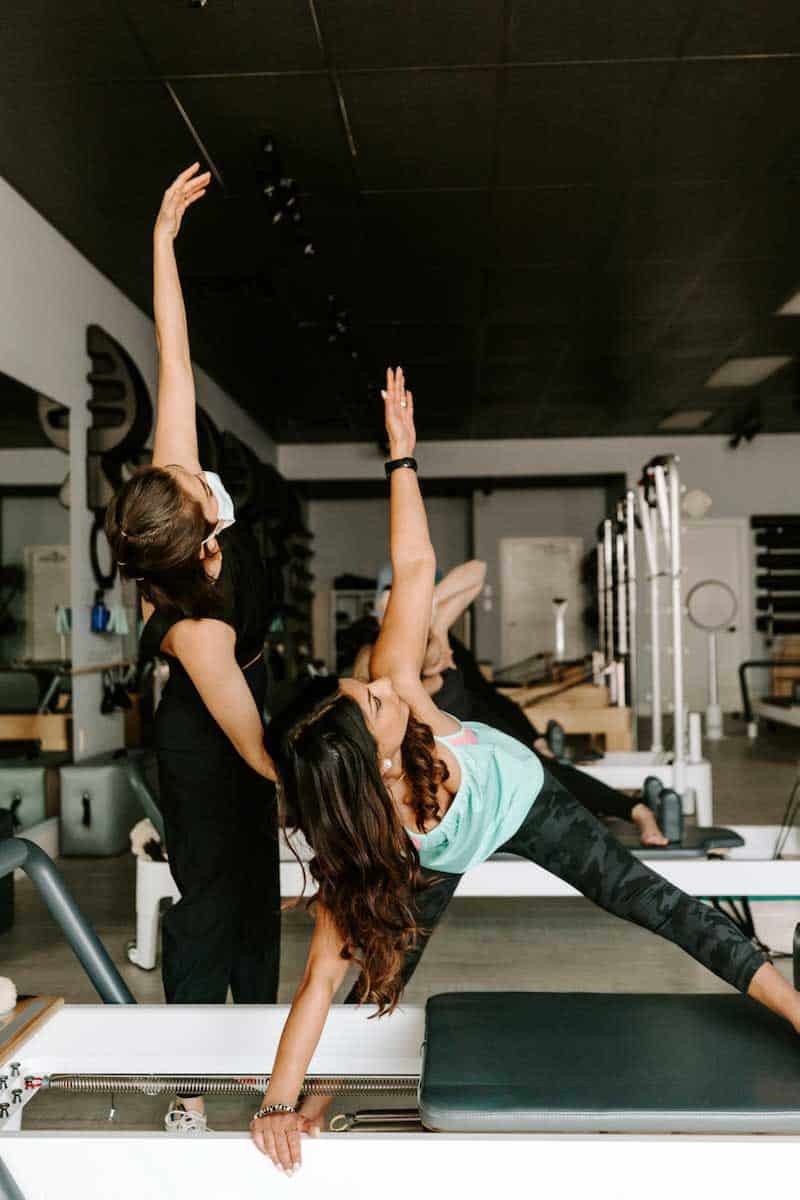
Wear form-fitting clothing (like yoga wear) so instructors can better see your movement. Bare feet or grip socks are allowed on the reformers—no regular socks, as they can be slippery.
How long is the Introductory Pilates Private?
The session will be 40-45 minutes in length, however, please book out a full hour in your own personal schedule.
What should I expect?
In your introductory private session, an instructor will discuss your goals for starting a Pilates program, including any limitations from past injuries or surgeries. This helps create a personalized plan tailored to your needs—especially important if you plan to join group classes.
You’ll then be guided through a foundational Pilates session covering proper form, technique, breathing, and equipment use.
Should I take privates or groups?
Private sessions offer the fastest, most personalized progress, while group classes provide a more social and affordable option. Even in groups, classes remain highly individualized, with equipment sessions limited to eight participants.
Where are you located?
Our address is 526 West Jefferson Boulevard Fort Wayne, IN 46802. We are ideally situated in the historic West Central neighborhood at the corner of Jefferson Boulevard and Fulton Street, offering easy in and out access and front-door parking at no cost. Our downtown location is centrally located, and easy to get to from the Greater Fort Wayne Area.
Tips for First Time Studio Visitors
Important Arrival Notes
- Due to minimizing the number of people in our studio at one time, please do not enter our building more than 5 minutes prior to your scheduled session.
- Make sure you enter through our west doors to access our studio. We often do not have anyone seated at our desk, so please feel free to hang out in the boutique or have a seat. If you need to change, we have a dressing room in the boutique (directly to the right in the hallway to the left). Your instructor will be out soon to greet you after finishing a previous session.
- We recommend that you schedule all of your introductory classes and/or privates and put them in your schedule. Use the MindBody app to keep track of your schedule. We find that students who commit to a schedule in the beginning have the greatest success getting used to the method and making it a part of their routine.
First time in a group class?
How often should I do Pilates?
How soon do you want to see results?
Joseph Pilates famously said, “In 10 sessions, you’ll notice a difference, in 20 sessions, your friends will notice a difference, and in 30 you’ll have a whole new body.” Though there is no universal answer, the more consistent you are with the discipline, the faster you as a student will witness, experience, and feel long-term positive results.
We recommend at least two times a week, three times being more preferable. Results, like many fitness programs, will only happen through consistency and dedication. The more you come, the better you will feel, and the quicker you will see results! Stick with it!
We are here to help along the way with answers to your FAQs, Tips while you're working out, and Studio Recommendations to enjoy the journey! We can't wait to welcome your to the Pure Movement community.