Strong abdominals aren’t built from doing more. They’re built from doing better.
In Pilates, we focus on developing deep, functional core strength that supports the spine, improves posture, and connects the entire body. This Pilates workout begins with smaller, more controlled exercises that teach the body to engage the abdominals with precision, developing deep core strength.
This mat flow uses a soft ball to guide awareness and support proper alignment as you move from simple activation into more dynamic, full-body exercises like Double Leg Stretch and The Roll Up. This workout is organized into three distinct blocks: the rib cage, the pelvis, and the inner legs. Each block builds on the last, so your body can move with more control, balance, and strength.
Block 1: The Rib Cage
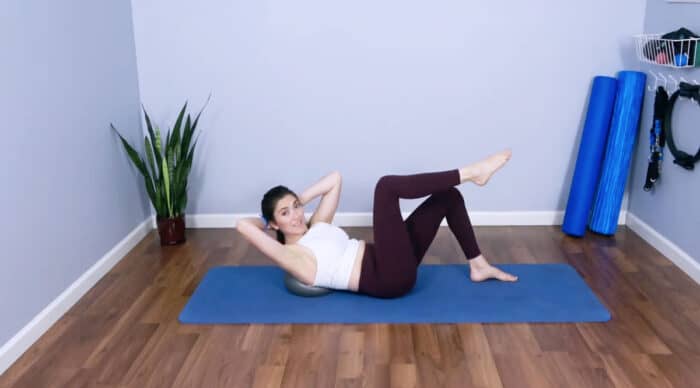
We begin with the ball placed under the rib cage to help open the chest and bring awareness to how the upper body connects to the core.
Starting with a gentle chest stretch over the ball, allow the ribs to expand and the front of the body to open. This releases the diaphragm and starts the breathwork. Breathwork helps build a deeper connection to our Inner Unit: the pelvic floor, multifidi, transverse abdominals, and diaphragm. The Inner Unit plays a key role in how Pilates workouts build core strength.
From there, move into a chest lift. Focusing on drawing the ribs inward and engaging the Inner Unit without gripping through the neck, shoulders, or glutes.
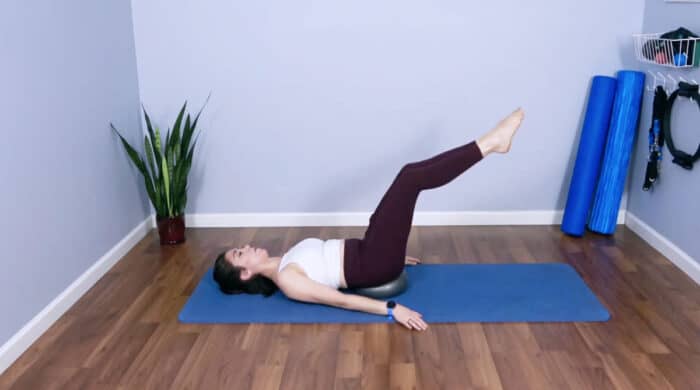
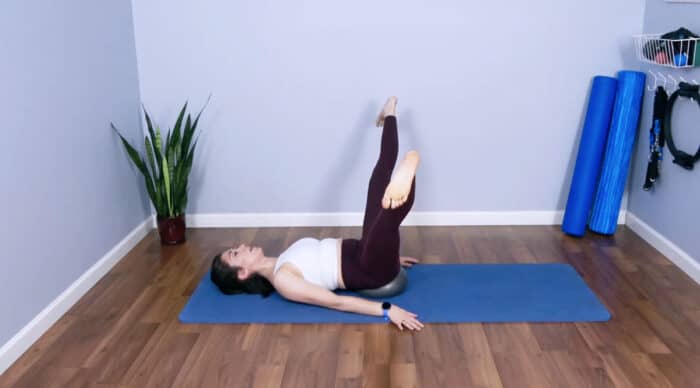
Then challenge your core connection through balance exercises. Move into Toe Taps and Femur Fall Outs, in which the legs move while the torso remains stable on the ball. These exercises teach the core to control movement rather than react to it. They build the foundation for stronger, more coordinated ab work.
Block 2: The Pelvis
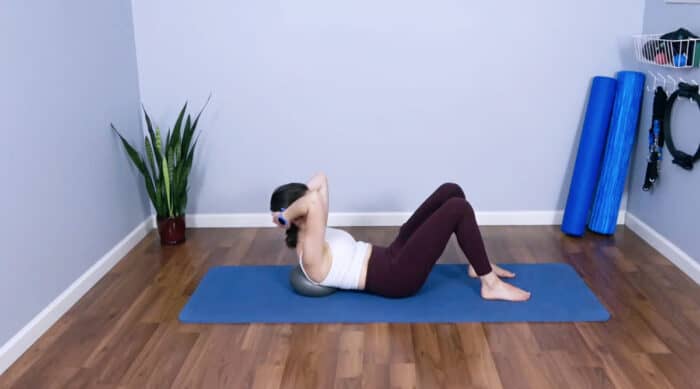
Next, the focus shifts to the pelvis, where the ball helps bring awareness to how the hips and abdominals work together.
Through Pelvic Clocks, you’ll explore small, controlled movements of the pelvis, learning the difference between pelvic mobility and hip mobility. As this progresses into marching variations, the challenge increases. Single-leg movement, like Marching, requires the abdominals to maintain pelvic control while the legs move independently.
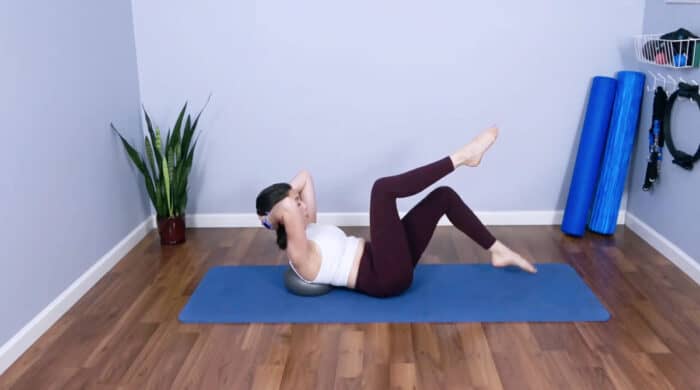
Then challenge your core connection through balance exercises. Move into Single Leg Stretch and Scissors. These Pilates exercises require both strength and coordination. The core continuously works to maintain pelvic control while the legs move dynamically.
This block reinforces the relationship between the lower body and core, helping you integrate deep core strength in larger movements.
Block 3: Between the Knees and Ankles
In the final block, to activate the inner thighs and connect to the core, place the ball between the legs.
This added feedback encourages the body to find midline strength. Midline strength is essential for maintaining alignment and control in more complex movements, such as walking, running, or cycling.
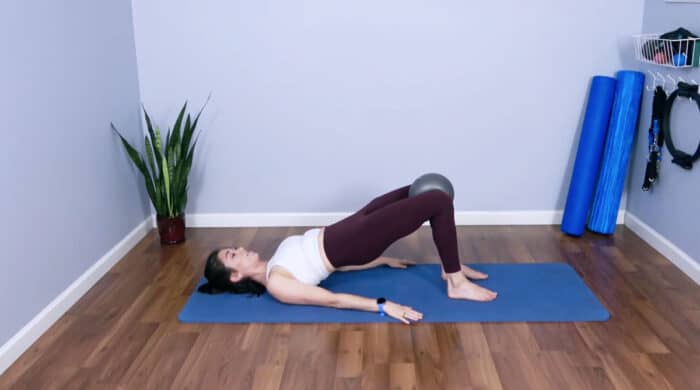
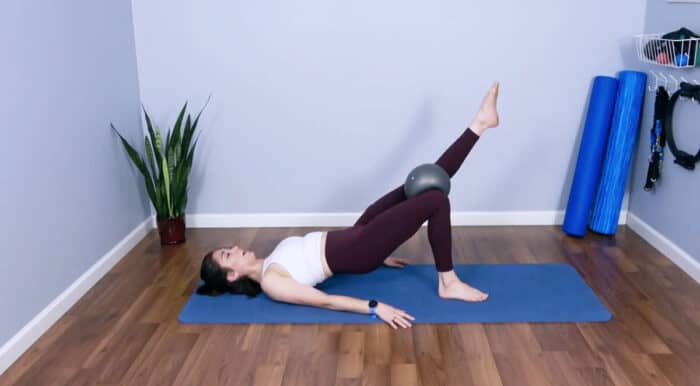
Start with Articulated Bridge. Squeezing the ball and moving the spine up one vertebra at a time, and lower one vertebra at a time with control. The connection between the inner thighs and abdominals develops that deep functional core strength. Then challenge your core connection through balance. While keeping your hips lifted in the Bridge, try to extend one knee at a time.
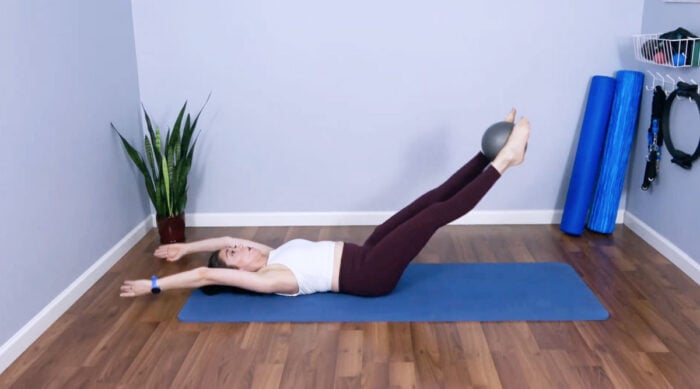
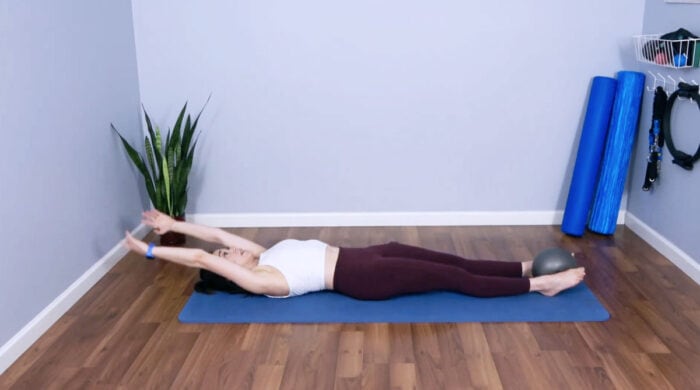
Then challenge your core connection with more dynamic exercises. Progress into the Double Leg Stretch and The Roll Up. These are full-body exercises that require strength, control, and coordination.
The Core Takeaway
Move from awareness to action in this sequence. By the time you get to the Roll Up, your deep core is connected and strong, and you can move through the whole Pilates workout with ease and efficiency. The result is not just stronger abdominals, but a more connected, supported body.
When practiced consistently, this kind of intentional work helps you develop deep core strength that carries into everything you do. From your workouts to your posture to the way you move through daily life.
Disclaimer:
THE INFORMATION EXPRESSED ON THIS SITE IS FOR EDUCATIONAL PURPOSES ONLY. WE DRAW ON OUR EXPERTISE AS PILATES AND MOVEMENT SPECIALISTS BY EXPANDING OUR PROFESSIONALISM THROUGH CONTINUING EDUCATION AND PERSONAL EXPERIENCES. WE AIM TO PROVIDE VALUABLE INFORMATION CONCERNING, BUT NOT LIMITED TO, PILATES, FUNCTIONAL MOVEMENT, AND FITNESS. YOU TAKE FULL RESPONSIBILITY FOR ALL DECISIONS NOW OR IN THE FUTURE CONCERNING YOUR HEALTH, LIFE, AND WELL-BEING. THIS INFORMATION IS NOT TO BE USED AS MEDICAL ADVICE EITHER TO DIAGNOSE, TREAT, CURE, OR PREVENT ANY DISEASE OR AILMENTS. YOU SHOULD CONSULT A PHYSICIAN BEFORE BEGINNING ANY EXERCISE PROGRAM.